Design isn’t a dark art practiced by mystic lords on mountaintops. The more we can demystify it, the better our design gets as we open our work up to the widest variety of other peoples’ expertise. There’s confusion over what skills actually fit inside design expertise, a confusion shared even by designers.
In my last conference performance of the year, I moderated a nicely successful panel at the recent Federal CIO Summit. I didn't make the cut for next year's SxSW Interactive Festival and haven't heard back from the IA Summit yet, so it's looking like Interaction 10 may be my one big UX presentation of 2010. I hope you'll come to Savannah to participate in my Visual Thinker's Pictionary.
It's hard to endorse a 73-slide deck, but John Blyberg's Library Skunk Works: User Experience Design for the 21st Century is so committed to low-text visual communication that ya gotta love it. (Plus, the Darien Library in Connecticut looks like it's super cool.)
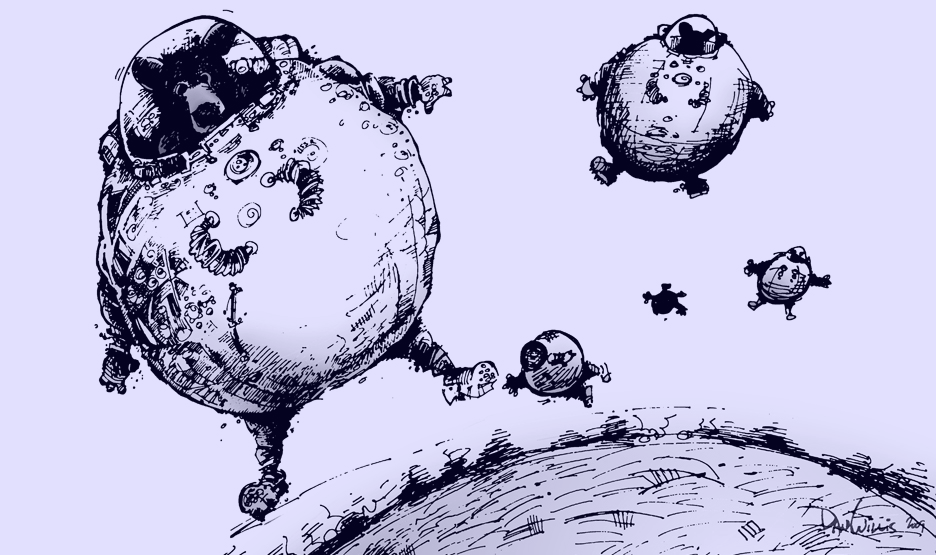
Problem-solving never happens in a vacuum. Culture creates the context for our solutions, directly affects our processes, and influences how we view our goals. That’s why the 1960s space race between the Soviet Union and the U.S. remains relevant to development work done today.
Read the article
Why are people so impressed by visual communication? I’m not complaining, don’t get me wrong, I crave the mad love I get when I use my funky diagrams to explain complex details of the projects I work on. And it doesn’t suck that visual thinking, something I’ve been working at my whole career, is suddenly sexy. I guess what’s bugging me a bit about the reckless enthusiasm for all things sketched is that not only is my stuff not THAT good, it’s also that people seem to go nuts for diagrams that are real crap, too.
I blame our old and mid brains.
Read the article
For more about UX Crank, see www.dswillis.com and to contact him, send e-mail to uxcrank [ at ] dswillis [ dot ] com.