UX Crank Wisdom gained from more than 20 years of screwing up
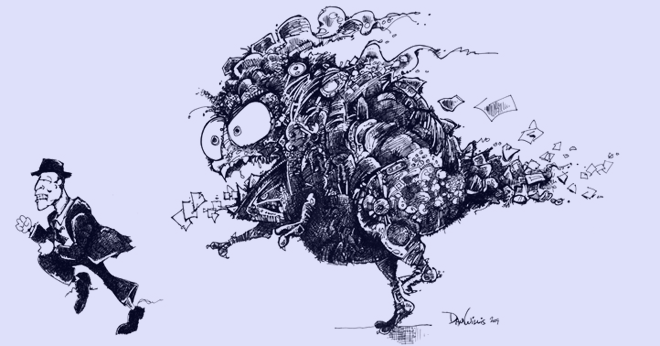
Design is a Side Effect illustration

6 Responses to “Design is a Side Effect”

  • [...] taking a break from my work I noticed Dan Willis’s post at uxcrank.com about the role of Design and Web sites in user experience. A Web site can affect emotion, but [...]

  • Karen says:

    Dan,

    As a visual artist, there is much here that I agree with. Most of it, in fact.

    But, not all. I was taught both explicitly and implicitly that “form follows function”. The idea being that if it is designed to function well then it will, by default, be “beautiful” (pleasing, aesthetically coherent or however you choose to name it).

    You cannot marginalize design, because design is inherent in the process. Design is the series of choices you make in order to accomplish a goal.

    Even if a thing (shoe, table, website, hair-clip)is badly designed, by default design is still a integral part of the process. Bad design or lack of conscious awareness of design is still design.

    If you want a real eye-opening way to consider design, read “The Design of Everyday Things”.

    The author is able to verbalize many of the ideas that artists and designers can’t quite put their finger on when talking about aesthetics and design.

    He tackles everything from cellphones to building facades to light-switch configuration. And makes any designer consider the choices they foist on people with their designs.

    When my students try to convince me of some obvious and universally accessible message in their work, I tell them there is one simple thing they can do to convince me of the clarity of their visual statement. Bring in the janitor. If he gets it, then they have accomplished their goal. If not, then they need to reconsider what they think they are “saying” versus what other people glean from their visual statement.

    I think what you are actually discussing is the style of an object or image versus the design. And that might be a function of discipline related jargon. Fine artists use the term design as a function of the process and end use. Designers might use it differently.

    However, many of your points remain valid in spite of the differing use of the term.

  • Since leaving a large agency and tarting on my own I am happy to be free of the latest buzz-word people (usually account hanlders) that use this terminology to justify their pay/existence. However a website’s design (exp. user interface/interaction design) can effect the bottomline, but I do agree with “Is what you gain from satisfying those user goals worth what it costs?” – a quesiton most agencies wont ask in case the answer is no and they dont get the work!

  • Well put. It is a side effect. Which is similar to something I often tell others… Good design is transparent. On most sites the user shouldn’t notice design. They should easily find the content and functionality without thinking about the actual design. I spend a lot of time getting clients to stop focusing on particular photos and colors, and see the bigger picture. Does their customer care what shade of blue they’re using on their site? Probably not. I’ve seen projects where a client spent three weeks finding just the “right” photos. Meanwhile 95% of their audience will never notice the photos. On most government and corporate projects design is successful when it stays out of the user’s way.

  • Jade says:

    To say ‘design is a side effect’ is a misunderstanding of the true skills of designers and the benefits of the design approach to solving problems.

    Below are the core expertises of Design as stated by Chris Conley, Professor and Director, Product Design Graduate Program, Institute of Design, Chicago:

    1. The ability to understand the context or circumstances of a design problem and frame them in an insightful way
    2. The ability to work at a level of abstraction appropriate to the situation at hand
    3. The ability to model and visualize solutions even with imperfect information
    4. An approach to problem solving that involves the simultaneous creation and evaluation of multiple alternatives
    5. The ability to add or maintain value as pieces are integrated into a whole
    6. The ability to establish purposeful relationships among elements of a solution and between the solution and its context
    7. The ability to use form to embody ideas and to communicate their value

    These skills can be applied to various problems, from products and websites, to services, strategies and systems. Design is a process the outcome can be both tangible and intangible. The design approach is user-centred; highly iterative, rapidly applying thinking and insights to the development (and test) of prototypes. I am currently involved in using the design process and design skills in developing strategies. Participle and Ideo are companies that use design to tackle the ‘big picture.’

    Tim Brown (CEO of IDEO) gives a great lecture at Ted on design thinking:
    http://www.ted.com/talks/lang/eng/tim_brown_urges_designers_to_think_big.html

  • This is a very good, emotionally charged, bald ape article…and it is spot on.

    I would add you are actually speaking about a performance framework, where brand (art) and economics (goals) must fit within the same framework to be a) economically sustainable and b) contain a certain amount of growth. Without some form of ‘payback’, above the current response, design does not need to ever change. Excellent work!

Respond

Cranky Tip #56

Design is a Side Effect

Design should always be a means to an end, with that end being to solve a well-defined problem. If we over-inflate design and allow it to obscure other aspects of a process, we make it harder to address core challenges.

Design firms and interactive agencies screw this up all the time and it’s pretty easy to spot. If the first set of questions your design experts ask on a new engagement includes some version of: “What adjectives best describe the Web site you want to build?” then you’re already doomed.

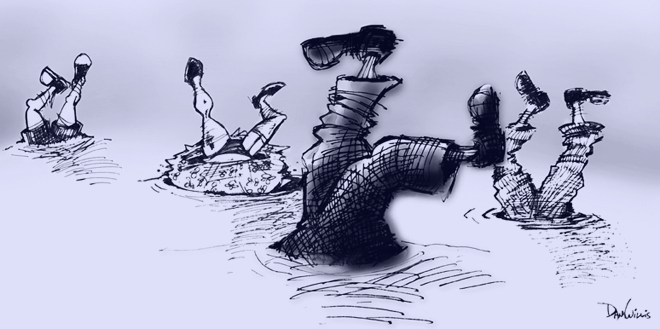
If you play along, you’re going to quickly end up in a foolish conversation about the site’s “mood” at which point it’s just a matter of time until you sink hours/days/months of your precious life into the black hole that is The Brand Conversation.

There is little in our capitalistic universe that is more real or more credible than the idea that an organization’s brand is equivalent to the experiences of its customers. Unfortunately, all of the other aspects of The Brand Conversation that you might hear are just different flavors of the same bullshit.

For many, the Amazon brand means nearly painless buying experiences. For some, a certain airline’s brand means consistently nightmarish travel experiences. Emotion and an individual’s perceptions are integral to both positive and negative interpretations and that’s where some of my fellow designers and the organizations they work for get distracted.

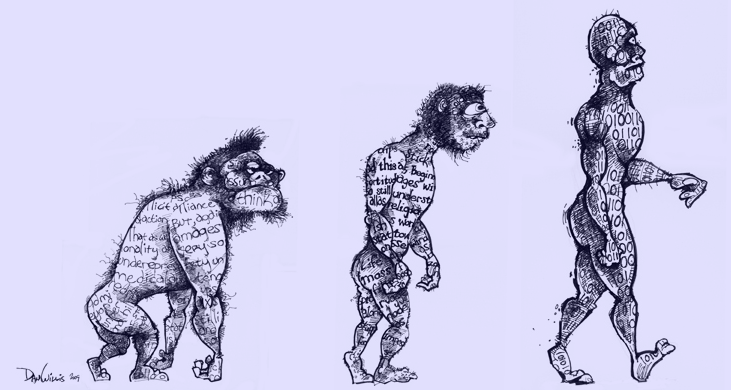
Evolution hard-wires emotion to visual communication for us bald apes, so it’s no wonder that the visual aspects of design have an effect on how we feel. But it’s easy to overstate the sustainability of that effect. A Super Bowl ad makes us chuckle, for example, but it rarely changes how we feel about the product, especially if how we feel is based on our personal experiences with that product.

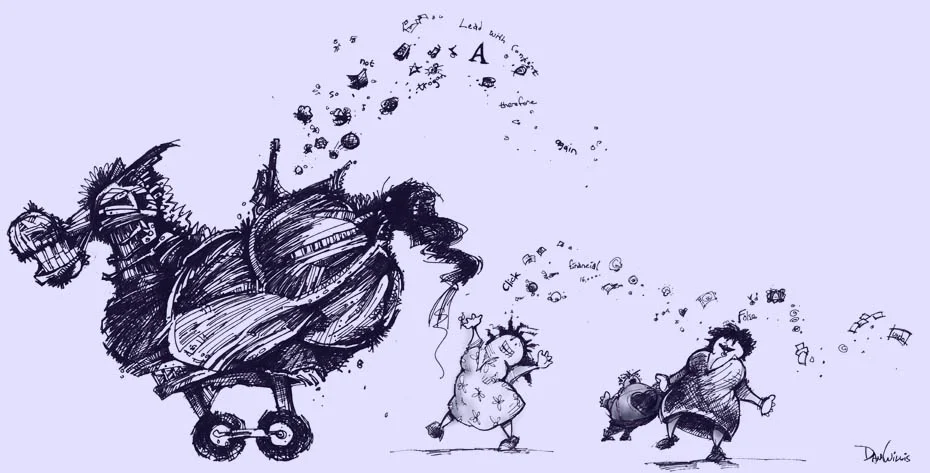
Companies still pay other companies millions of dollars to create “branding experiences” online. The term is kept amorphous and flexible so it can drop into ad copy and sales pitches and trade articles, where a nonsensical phrase like “the Web site gives customers the opportunity to sample the brand and experience it in their own virtual lifestyle” is tossed around as if it actually means something.

But we, as customers, aren’t looking for brand experiences; we just have stuff we want to get done. We have goals. Some of these goals are tiny and silly, while others are galactic and profound. And regardless of their scale and scope, we want to achieve our goals as quickly and effortlessly as we can.

A Web site can affect emotion, but only fleetingly. A customer’s experience can involve a Web site, but even in the case of an online retailer, the Web site is only ever a part of the overall experience. So by itself, Web design is an impotent tool for affecting an organization’s brand.

That’s the thing though, Web design isn’t a solo act. It’s not an end unto itself. Design is one of the side effects of a solid problem-solving process that defines these key elements:

  1. Who are your Web site’s most important users?
  2. What are the goals of your Web site’s most important users?
  3. Which of the goals of your Web site’s most important users can your organization address most effectively?
  4. Is what you gain from satisfying those user goals worth what it costs?

You might think I’m belittling or marginalizing design when I say it’s a side effect, but that’s not my intent. In fact, in the proper context, I think design is astonishing. I love design like other people love chocolate, or their mothers, or heroin. Even after all these years, new design challenges still make my heart beat faster. To me, design is highly visual, but so much more than what something looks like. To me, design is how something works, not as some theoretical activity, but for a specific, well-defined user. To me, design is a wildly creative activity, but one that is judged stringently on its ability to satisfy well-reasoned criteria.

To me, design is a beautiful, powerful, fascinating side effect.

Cranky RSS feeds

For more about UX Crank, see www.dswillis.com and to contact him, send e-mail to uxcrank [ at ] dswillis [ dot ] com.